Have a Question? 1.866.278.3216

What’s Happening with Third-Party Cookies?
Google Chrome is phasing out support for third-party cookies as part of its Privacy Sandbox initiative. This is a significant shift in how websites track user activity and deliver personalized experiences — and it has real implications for financial institutions and their digital services.
Key Terms to Know
- Cookies: Small pieces of data stored in a web browser, commonly used to maintain user sessions, remember preferences, and track activity across websites.
- Third-party cookies: Cookies set by a domain other than the one you’re currently visiting. For example, if your online banking portal embeds a third-party analytics or mapping service, that service’s cookies are considered third-party.
- Inline frames (iFrames): A method websites use to embed content from other websites. If your banking site embeds a map or chat widget, that embedded content runs inside an iFrame.
- Partitioned Cookies (CHIPS): A new standard called Cookies Having Independent Partitioned State that allows third-party services to function without cross-site tracking.
How This Affects Financial Institutions
Many banks and credit unions rely on third-party integrations within their online portals — analytics tools, customer support widgets, embedded applications, and more. When Chrome blocks third-party cookies, some of these integrations may stop working as expected.
Common areas of impact include:
- Online banking portals that embed third-party services
- Analytics and tracking tools used to measure customer engagement
- Embedded widgets such as chat, maps, or calculators from external providers
What You Should Do
- Audit your digital properties: Identify where third-party cookies are used in your online banking, statement portals, and customer-facing websites.
- Work with your vendors: Confirm that your third-party service providers are updating their integrations to support partitioned cookies (CHIPS) or alternative approaches.
- Test in Chrome: Use Chrome’s developer tools to simulate cookie restrictions and verify your services still function correctly.
How InfoIMAGE Is Preparing
At InfoIMAGE, we’re proactively updating our digital delivery platforms to ensure compatibility with the latest browser privacy standards. Our eStatement and document delivery portals are built to work seamlessly without reliance on third-party cookies, backed by the same rigorous security and compliance standards our clients depend on.
If you have questions about how this change may affect your InfoIMAGE services, contact your Account Manager.
New USPS postage rates take effect July 2025. Here’s what’s changing and how to budget for future increases.

InfoIMAGE launches a refreshed brand identity across all channels — a modern look reflecting our commitment to innovative document solutions.

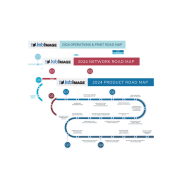
New quarterly newsletters give clients a direct look into InfoIMAGE’s Network, Operations & Print, and Product departments.
Building Trust With Clients: The Key To Long-term Success
Trusted by premier financial institutions for over 40 years
InfoIMAGE works with every major core and Internet Banking Providers. Our ability to work directly with your core and update the core file will save you time and effort.

Broadview partnered with InfoImage 5 years ago. As a Broadview partner, InfoImage is highly responsive to our requests, taking the time to understand our business needs, which in turn allows them to develop solutions and strategies to support our goals. By tapping into their expertise, innovative solutions, and collaborative teams, Broadview has been propelled to the forefront of providing an exceptional digital experience for our members.
Broadview FCU
Get started with InfoIMAGE today
Our team is standing by to discuss your requirements and deliver a demo of our industry-leading platform.